
The Faces Behind the Miles: Loraine
In this edition of The Faces Behind the Miles, we’re proud to introduce another incredible voice from our Miles for Myelopathy community.
Living with DCM and navigating a long and often frustrating journey to diagnosis, Loraine shares an honest and powerful story of persistence, resilience, and the reality of life with a condition that is still widely misunderstood. From years of unexplained symptoms and delayed answers to spinal surgery and ongoing challenges, her experience highlights exactly why awareness and earlier diagnosis are so vital, not just in May, but every day.
1. Can you tell us a little about yourself and your journey with Myelopathy?
I live with Cervical Myelopathy and my journey has been long and difficult with years of symptoms before finally getting diagnosed. I was misdiagnosed and dismissed many times before MRI scans showed the damage in my cervical spine. My symptoms were electric shocks down my leg and spine, pins and needles in my hands which kept me up at night, burning pain in my leg and numb toes, and a hot trickle sensation down the left side of my neck down my right leg to my foot. I also felt there was a thread tied to my toe and hanging down, though there was nothing there.
I had cervical decompression surgery in January 2024 from C2-C7 to try to stop progression and keep me mobile.
2. What inspired you to take part in fundraising and awareness activities this month?
I wanted to take part in awareness activities because too many people are diagnosed far too late. Last year I was well enough to walk 1 to 2 miles a day slowly and raise money for Myelopathy.org. This year, due to constant lumbar pain, I’ve had to reduce physical exertion
3. Why is raising awareness for Myelopathy so important to you personally?
Raising awareness is personal to me because my symptoms were overlooked for years. Many people are told it’s anxiety, fibromyalgia or “just getting older” before anyone checks their spine properly.
Earlier diagnosis can change lives and lessen permanent symptoms.
4. What does Myelopathy.org mean to you and how has the charity supported you?
Myelopathy.org means support, understanding, and awareness. The charity helps people feel less alone and gives valuable information to patients and families going through frightening and confusing times.
Myelopathy had a six-month pilot phone line last year and I was proud to be part of the phone line team, taking calls from callers anxious about their condition. I felt useful and tried to reassure and point them in the right direction for help. I’ve been raising awareness online and supporting others in our support group by sharing my story and encouraging people to push for answers when they know something isn’t right.
5. You’re completing an amazing challenge — what are you doing, and why did you choose it?
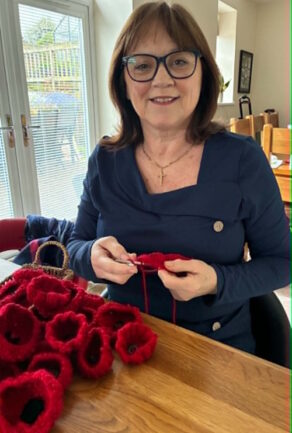
I am knitting poppies and raising money for Myelopathy.org. My family challenged me to knit 35 (I only learnt to knit six months ago). The poppies will be part of a display in my church on Remembrance Sunday.
I know firsthand how devastating delayed diagnosis can be both physically and emotionally.
6. What has been the biggest challenge of living with Myelopathy that people may not understand?
One of the biggest challenges is that family and professionals often can’t visually see our illness. The DCM sufferers may not understand the pain, balance problems, fatigue, weakness, numbness, or how much daily life changes for them and their families.
7. How has Myelopathy affected your daily life, family life, or mental wellbeing?
Myelopathy has changed every part of my life physically, emotionally and socially.
It affects my independence, confidence, mobility, and mental wellbeing. Some days are incredibly hard and I’m exhausted fighting pain, but support from others who understand helps me so much on our Myelopathy group. I also like to try to help my fellow warriors and give answers and advice as much as I can.
8. What message would you like to share with someone who has just been diagnosed with Myelopathy?
To anyone newly diagnosed, I would say you are not alone. Be kind to yourself, listen to your body and don’t be afraid to ask questions or seek support. Recovery and symptoms can be very different for each person.
9. What would you say to people who are considering donating or supporting Myelopathy Awareness Month?
I would say every donation and every share helps raise awareness of a condition many people, including some healthcare professionals, still know very little about. Awareness can lead to earlier diagnosis and better outcomes for everyone.
10. Looking ahead, what changes or improvements would you like to see for people living with Myelopathy?
I would love to see earlier diagnosis, better awareness among healthcare professionals, faster referrals to spinal specialists and more support for people living with Myelopathy both before and after surgery.
I suffer still with some symptoms especially itchy arms, burning groin and left leg.
I’m now battling my Lumbar L3/4/5 and S1, but that’s another story……….