
The Faces Behind the Miles: Amal
In this edition of The Faces Behind the Miles, we’re proud to introduce Amal, one of the incredible individuals supporting Miles for Myelopathy this May. Like many in our community, Amal’s journey with Myelopathy has been complex and deeply personal, but through it she has found strength, purpose and a passion for raising awareness. From her experiences of diagnosis to the creative way she’s giving back this Awareness Month, Amal’s story is a powerful reminder of why every mile – and every voice – matters.
1. Can you tell us a little about yourself and your journey with Myelopathy?
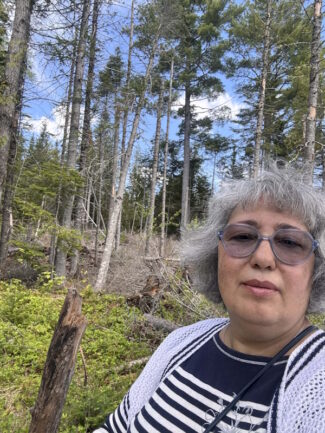
My Name is Amal, I live in New Brunswick, Canada. I’m a retired paediatrician, married for 34 years to my supportive husband and mother of two wonderful young adults.
Like most people who have DCM, my journey with this condition was long, confusing, insidious, painful, exhausting, frustrating, both defeating and empowering and also very humbling and eye opening.
My very first symptoms started in 2011 with mild right wrist pain and weakness that made it difficult for me to hold heavy things like casseroles. I also lost the sensation of heat in the same hand temporarily, which alarmed me to get a referral to neurology. I was seen quickly and had a thorough examination along with normal EMG and brain MRI. All these tests were normal and my symptoms weren’t too bothersome then, and weren’t constant either, leading to them being considered just benign wrist fatigue.
Since then, the symptoms and all sorts of pain kept adding up and aggravating, sometimes then improving over periods of time. This made it difficult to pinpoint their origin, especially as DCM had affected several of my body functions including temperature regulation, my gastrointestinal tract, my muscle strength, my vision, my endurance, and I also suffered from frequent different kind of headaches and perpetual skin allodynia.
I had several visits to the emergency department for sudden paralysing muscle cramps that were considered benign until one of them prevented me from getting on time to a call to take care of a premature new-born. This made me go off the heavy call schedule that I was a part of, and seeking more medical attention for a diagnosis to justify my inability to continue my call duties. In January 2019 I was diagnosed with Fibromyalgia and hyper mobility syndrome by a rheumatologist, and that was then a sufficient explanation for my symptoms as per medical textbooks. But, despite following the treatment and recommendation to manage fibromyalgia, my health kept declining and the fatigue became unbearable, forcing me to go part time. I started working only four office hours per day four days per week from April 2019 to June 2022, when I decided to retire and take care of myself.
In the meantime, I was investigated for Myasthenia Gravis because of the perpetual exhaustion I couldn’t shake. This was also ruled out but, despite then having more obvious DCM symptoms, the neurologist who saw me considered everything I had as fibromyalgia symptoms and didn’t clue in the possibility of a spinal issue as the cause of my ailment.
A year after my retirement I began having neurogenic claudications when walking a certain distance. They kept shrinking until I couldn’t walk nor even stand for more than ten minutes anymore and, since most of my symptoms were on the right side of my body, I ended up questioning the fibromyalgia diagnosis and asking my family doctor for spinal MRIs with the idea that I probably had a spinal tumour as I had never heard of DCM then.
My first cervical MRI was done in September 2023 and finally the right diagnosis was clear. It showed disc herniations causing severe spinal stenosis at C5-6 and C6-7 levels. Despite the seriousness of my MRI findings I had some conflicting advice against referring me for cervical spinal surgery from two specialists I saw before I was finally able to see the neurosurgeon, who told me that I needed the surgery as it’s the only way to relieve the pressure off my spinal cord and help slow the progression of my symptoms without any guarantee that they would resolve nor fully improve, considering the time it took for me to be diagnosed .
My surgery was very successful and I had a spectacular recovery initially, but some lumbar spine issues started bothering me nine months after my first surgery. Luckily, they are currently getting better with frequent physiotherapy treatments, making me optimistic about not needing another surgery.
2. What inspired you to take part in fundraising and awareness activities this month?
I feel that DCM and other degenerative disc diseases are sort of an omitted chapter off medical literature. I had my general medicine diploma before specialising as a paediatrician, and I have never been sensitised to the impact of the degenerative conditions of the spine, I knew nothing about DCM when I got my diagnosis. I had to search it and there weren’t many clear resources available on the subject. Also, the delay before I had the proper diagnosis, and the conflicting opinions even after it was confirmed before finally having the proper treatment make me think that DCM is still a mysterious condition even within the medical field. I found out through discussions with the DCM support groups, that indeed it’s a condition that is in dire need of increased awareness and more proactive and sensible management, especially as it can lead to permanent disabilities. Its occurrence is no longer limited to the elderly as used to be the common belief .
3. Why is raising awareness for Myelopathy so important to you personally?
I’m not an alarmist in general, but with the era of cellular phones, the rushed life, the increasing rate of obesity and the increasing exigencies of life that force people to take many jobs and have very little time to restore and relax their bodies, I’m afraid the occurrence of DCM is going to happen in younger people with a crescendo rate. I hope that by raising more awareness about DCM there will be effective measures for detecting the risks of developing it, earlier diagnosis by establishing a clearer picture of DCM as a syndromic progressive condition. I hope there is improved access to tests and conservative treatments, better follow up by qualified teams that are educated about spine injuries since DCM is a leading cause of chronic spinal injury, and better rehabilitation during the post-surgical recovery period when the chances for recuperation of function are higher if patients are properly guided, helped, and monitored closely. Degenerative spinal conditions are known to be progressive, which quite often can hinder the results of a previously successful surgery.
4. What does Myelopathy.org mean to you and how has the charity supported you?
When I had my DCM diagnosis, I needed to know more about it and started watching videos and searching articles. Some of the most comprehensive videos I watched were done by Dr Rory Murphy. In one of them, he recommended checking the Myelopathy.org website and, sure enough, I found the best and most complete resources to understand my issues there. I immediately joined Myelopathy.org Support Group and it was the best thing that happened to me during the scary period following my diagnosis, the anticipation of the surgery, and the anxiety surrounding it. I found people who know what DCM is because they’ve lived through it, and they were all eager to share their experiences and advocate to help anyone who goes through the same hardship. It was simply the most fulfilling thing for me to be part of this group, despite the circumstances that made me stumble on it.
5. You’re completing an amazing challenge — what are you doing, and why did you choose it?
I did physical activity challenges in 2024 and 2025, and both were very satisfying and empowering for me.
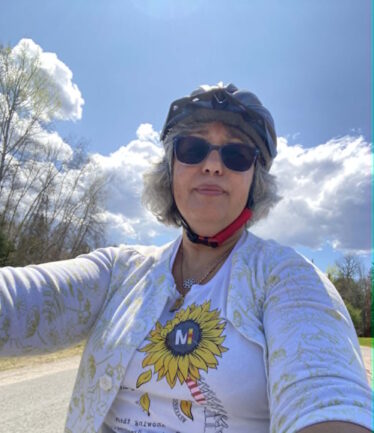
I was going to do another physical activity challenge this year but my new lumbar spinal issue created some hesitation about whether I should go for it or listen to my body and just encourage the participants of this year’s challenge. At the end I decided to both encourage this year’s team and participate, but with something that had a huge role in keeping me content all through the years I suffered from debilitating pain and gradual incapacitation due to DCM. It is my creative outlet that I successfully use as a distraction from the pain most of the time. My participation this year is by making special bracelets for the awareness month; original little watercolour paintings mounted as bookmarks and a set of printed cards of some of my paintings. All of them will soon be available for purchase at Myelopathy.org store.
6. What has been the biggest challenge of living with Myelopathy that people may not understand?
- Not being able to commit or needing to change plans last minute.
- Looking good, while not feeling too good.
- Needing a lot of me time, doing things at the pace that feels best for me without feeling rushed nor pressured by someone else’s schedule.
7. How has Myelopathy affected your daily life, family life, or mental wellbeing?
I wouldn’t say it has affected me badly; it rather changed my perspective and my outlook on the things that matter most in life. At the end of the day, I feel that DCM is no better nor worse than any other major health issues that being human make us prone to sooner or later in life.
8. What message would you like to share with someone who has just been diagnosed with Myelopathy?
- Be gentle with your body
- Befriend your pain. It is only a loud messenger about something that needs attention in your body. Listen carefully to it and don’t try to suppress completely.
- Find a creative outlet to distract you from the pain and uplift you when you feel low.
- Take life with a grain of humour one day at a time.
9. What would you say to people who are considering donating or supporting Myelopathy Awareness Month?
Thank you! Thank you for understanding that MYELOPATHY MATTERS 🙏
10. Looking ahead, what changes or improvements would you like to see for people living with Myelopathy?
A clear consensus about symptoms, red flags, treatment, long term follow up and management, as well as screening and post-surgical rehabilitation.