
When the Name Changed Everything: Life After a Myelopathy Diagnosis
After being diagnosed with Myelopathy, I began to understand how much of the condition is invisible to others. In this blog, I reflect on the changes that came after my diagnosis, the losses I’ve had to navigate, and what learning to live differently has meant for me. I hope it offers understanding, validation, and encouragement to anyone living with this condition.
Life Before Myelopathy
In my previous blog, I spoke about the life I once lived being active, outdoors,scuba diving, kayaking, and spending long days walking and climbing. I believed I was still young, with years ahead of me to keep doing the things I loved.
Then along came Myelopathy, and reality hit.
Physically, I could no longer do those things. Even simple tasks such as walking up the road, climbing the stairs, and getting in and out of the bath became difficult. When I pushed myself, I paid for it in pain that lasted hours, sometimes days. Suddenly, I felt old. More than that, I felt as though life had quietly shrunk around me.
I began to ask myself questions I never expected to face:
- What was I without the things that once defined me?
- How could I suddenly be unable to do the activities that had brought me so much joy?
For the first time, I understood that life could no longer continue as it had before.
Grief settled in slowly. I would look at my scuba gear, at the kayak I had only used a handful of times, and feel an overwhelming sadness. I stopped trying. I stopped caring. I told myself they were “just things” – only a kayak, only scuba diving, only a walk along the coast.
But they weren’t just things. They were pieces of me. And losing them felt like losing myself.
Then, one morning, something shifted.
I woke up and looked at myself, really looked, and I didn’t recognise the person staring back. My eyes were tired. My body ached. My mind felt heavy. The spark I once had was gone.
I remember thinking, Is this who I’ve become? Is this who I want to be?
That was my turning point.
Not dramatic. Not a crisis. Just a quiet moment of honesty. A realisation that while l couldn’t change my diagnosis, I could decide how I lived alongside it.
Life would need to be lived differently.
Life Didn’t Pause After That Realisation
Realising life needed to be lived dfferently didn’t suddenly make it easier. There was no manual, no clear path, just the same body, the same symptoms, and a world that still expected me to function as before.
I still went to bed in pain and still woke up in pain, but I still had to go to work. I had to walk the dog. I had to go shopping. All the everyday things we all do, but for me it was doing them differently, slowly, sometimes in pain, but still having to do them.
People still relied on the same Lee, and the internal pressure to keep appearing capable was tough going. It was easier choosing not to explain because it’s exhausting, and there was the constant conflict of not wanting to complain.
Navigating my way around this new life was tricky to start with. When people see you doing anything, they think you’re okay. They don’t seethat I am in pain. It’s hidden. It’s invisible symptoms.
After that realisation,another challenge became impossible to ignore: the emotional weight of living with symptoms that others couldn’t see.
The Weight of Invisibility
There were days when I doubted myself, not because the symptoms weren’t real, but because they weren’t visible. When people looked at me and saw someone who appeared fine, it was easy to question my own experience. I found myself wondering whether I was overreacting, whether I should be coping better, whether I was letting myself down. When pain, fatigue, and neurological symptoms exist quietly beneath the surface,it becomes surprisingly easy to minimise them, even to yourself.
Cancelling plans became one of the hardest things to accept. Slowing down felt like failure. Each time I said no, or had to pull back, guilt followed closely behind. I worried about disappointing people, about being seen as unreliable, about letting others down. Even when I knew rest was necessary, it didn’t stop the sense that I was somehow falling short.
What I hadn’t anticipated was the loneliness. Not the absence of people, but the quiet isolation of carrying symptoms alone. When you don’t look unwell, there is often an unspoken expectation that you’ll keep up, push through, or explain yourself. Over time, it can feel easier to say nothing at all, to carry it quietly, even when it’s heavy.
This was particularly difficult for me, given the life I had lived before Myelopathy. For nearly three decades, I built a career in health and social care. I was used to being reliable, present, and strong – someone others depended on. I showed up, took responsibility, and kept going. Letting go of that version of myself has been one of the hardest adjustments of all.
Redefining Strength
Learning that I could no longer measure my worth by productivity or endurance has taken time. Strength now looks different. It looks like listening to my body, setting boundaries, and allowing myself to rest without apology. It’s a quieter kind of strength,but no less real.
Living with Myelopathy has taught me that moving forward doesn’t always mean moving on. Some days still carry grief for the life I once had, and some days are heavier than others. But I’m learning that living differently doesn’t mean living less. It means paying attention, pacing myself, and accepting that my body now works to a different rhythm.
Much of this journey remains invisible. The pain, the fatigue, the neurological symptoms don’t announce themselves. But they shape every decision I make and every step I take. Learning to honour that reality, even when others can’t see it, has been one of the hardest and most important lessons so far.
I no longer measure strength by how much I can endure or how much I can push through. Strength now looks like honesty, self-compassion, and knowing when to stop.
It’s choosing to care for myself in ways I once didn’t have to think about, and allowing space for rest without guilt.
Moving Forward
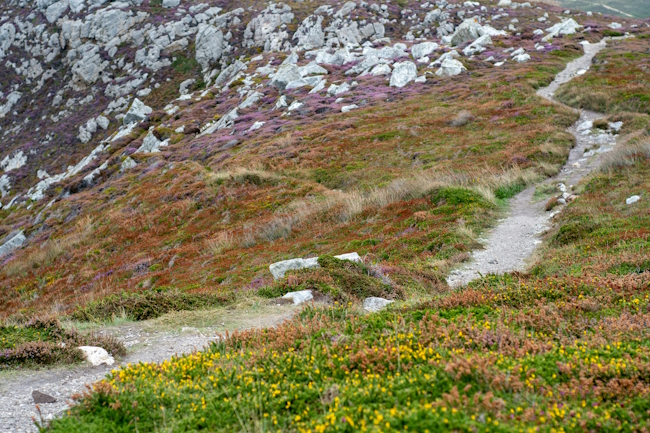
This isn’t the end of the story. It’s part of an ongoing process of adjustment, understanding, and learning who I am now. I’m still walking this trail with Myelopathy, just more slowly, more consciously, and with greater kindness towards myself.
Myelopathy changed the path, not my willingness to keep going. This is still my trail. I’m just learning how to walk it differently.
One step at a time.
One breath at a time.
One day at a time.