

Interview with Lindsay Tetreault
What is your name and where do you live?
My name is Lindsay Tetreault and I currently live in Brooklyn, New York but will be moving to Boston, Massachusetts in June 2024. I have enjoyed living in Brooklyn because it is much quieter than Manhattan but still accessible to all great things New York City has to offer.
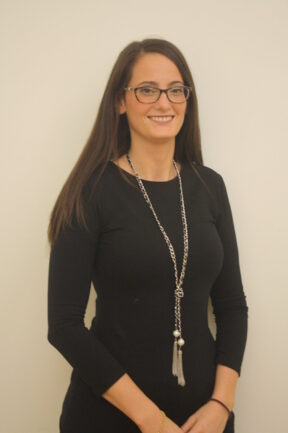
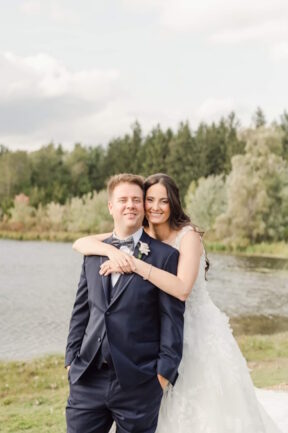
Tell us a bit about yourself. What do you do when you are not working with Myelopathy.org? What do you do during your spare time?
I was born and raised in the Greater Toronto area in Ontario, Canada. I completed my Bachelor’s of Science at the University of Toronto followed by my PhD through the Institute of Medical Sciences under the supervision of Dr Michael Fehlings. I then moved overseas to Cork, Ireland to study medicine at the University College Cork (and meet my wonderful husband, Keegan). I am now currently a resident in neurology at NYU Langone in New York City and will be pursuing my fellowship in neuromuscular medicine at Massachusetts General Hospital this summer.
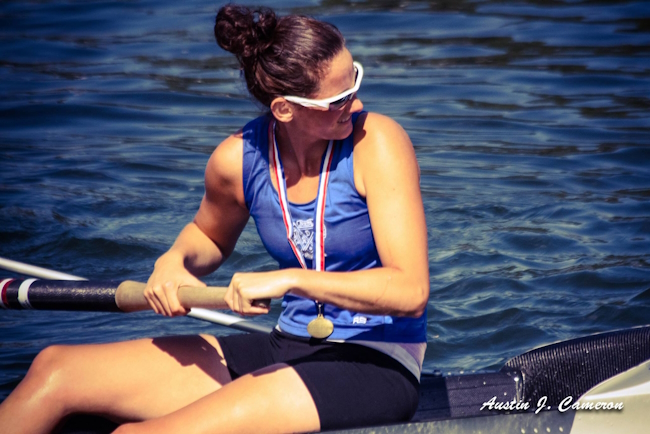
I was a varsity and high performance rower for several years during my undergraduate and graduate degree and had the privilege of rowing alongside some of our Olympians in the sport. I am truly passionate about medicine and research but also enjoy exploring the city I live in, playing board games, going to escape rooms, and staying active.
What is your role at Myelopathy.org?
I have participated in several research initiatives through Myelopathy.org. I was invited to be the information specialist for the RECODE-DCM project, which aimed to summarize the top 10 research priorities for future DCM research. In this role, I sifted through thousands of survey responses and identified key themes for future studies on the diagnosis, treatment and long-term management of DCM.
I am currently the leader of the Diagnostic Criteria incubator which aims to develop simple but generalizable criteria to help physicians identify patients with potential DCM. It is the hope of this project to provide a tool to primary care physicians and other healthcare professionals to expedite the diagnosis of patients with DCM so that they can be appropriately triaged for definitive surgical management.
Why did you get involved with Myelopathy.org?
I was approached by Dr Benjamin Davies and Dr Mark Kotter to join the RECODE-DCM project. I was fascinated by their work and their ongoing research and community outreach initiatives. I was particularly interested in working alongside other healthcare professionals and individuals living with DCM as I believed these groups could offer unique perspectives. I am hopeful that it will be possible to develop valid and reliable diagnostic criteria for DCM to identify patients who should undergo further neurological workup and/or assessment by spine surgery.
How did you hear about Myelopathy.org?
I was a PhD student in Michael Fehlings’ clinical research lab while Dr Mark Kotter was completing his spine surgery fellowship at the Toronto Western Hospital. Dr Kotter ultimately introduced me to Dr Benjamin Davies, who I have collaborated with on several research initiatives since our original meeting. It has been a pleasure getting to know both Mark and Ben over the years and being part of both the research and community outreach offered through Myelopathy.org
What has your experience been like with Myelopathy.org?
It has been a tremendous learning experience. I have not only had the opportunity to collaborate with internationally recognized spine surgeons but also with other healthcare professionals who encounter patients with DCM, either before diagnosis or after surgical management. Myelopathy.org also engages individuals with lived experience of DCM and their caregivers who undoubtedly contribute unique perspectives relating to both the diagnosis and management of DCM.
It has been eye-opening to hear the barriers they encountered on the way to a diagnosis, as well as the challenges they face on a day to day basis due to ongoing symptoms. I am so privileged to be part of a group that was developed to improve research in DCM in hopes to enhance the quality of life of individuals who live with the condition.
Tell us two truths and one lie about yourself.
- I have been to 6 of the 7 continents in the world.
- At 2 years old, I climbed up onto a chair in order to unlock the door to my hotel room and managed to walk down to Virginia Beach while my mother was sleeping.
- I ran a junior rowing training camp in Tempe, Arizona during the cold Canadian winters.