
The Day My Voice Left Me
I was one of eight young, emerging opera singers in South Africa selected by Mimi Coertse — a soprano coloratura of international stature — to make my debut singing alongside her. I was twenty-two years old. That moment marked the beginning of what many believed would be a significant operatic career. People didn’t tell me I was better than anyone else — they told me I belonged. That I was part of a rare generation, and that my voice could carry me far. Some even said I might become our generation’s Maria Callas.
But this was never about ego. Singing was not something I chose — it was everything I knew. Music didn’t live in my body; my body existed inside the music. Breath, sound, movement — this was my natural language, long before words. I loved singing with a depth that felt instinctive, cellular. I didn’t want fame. I wanted expression. I wanted to sing everywhere, for everyone.
I was also acutely aware of how lucky I was.
I knew I had been born with something rare, something precious, and I treated it with reverence. I was — and still am — a humble person. What you see is what you get. I have a big personality, yes, but I have always been grounded in gratitude. I remember sitting one day, listening back to a live recording made with Peter Valentovic — then music director and conductor of the Cape Town Philharmonic Orchestra — who had accompanied me at the piano. As I listened, I thought, That can’t possibly be me. The sound felt almost otherworldly.
And then the thought followed immediately: Where am I going from here? Europe? Anywhere? Everywhere?
I remember praying in that moment. Thanking God — deeply — for the gift of a voice like that. For my mother, who had given me the very best musical education she could. For being trained by extraordinary teachers who believed in me. I felt held by purpose, by possibility, by grace.
And so, full of faith and excitement, I went forward.
And then my body interrupted the story.
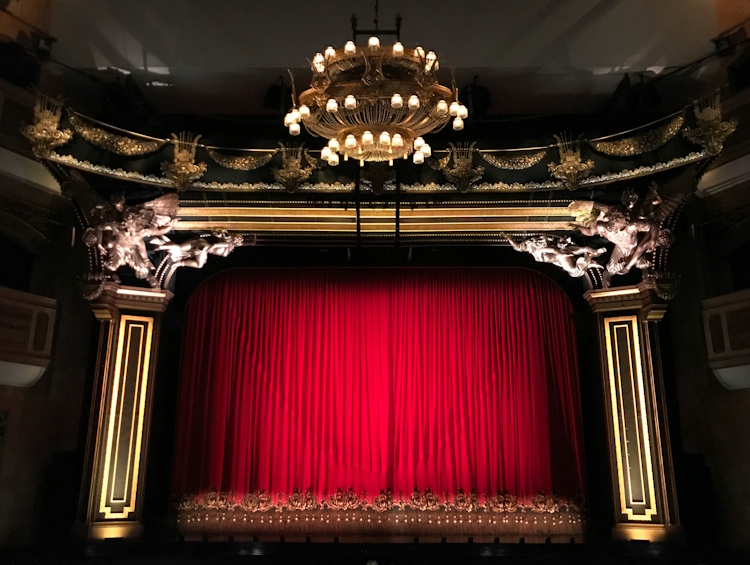
It happened on stage.
One second, my body was doing what it had always done — supporting, breathing, responding — and the next, it turned on me.
I noticed my hands first.
They weren’t hands anymore. They were claws. Pulled inward, rigid, grotesque, completely outside my control. My arms hung stiffly next to my body like dead weight. I remember thinking, Move. Just fucking move. I sent the command clearly, desperately — and nothing happened.
My heart slammed into my chest.
This wasn’t nerves. This wasn’t adrenaline. This wasn’t stage fright. I knew my body. I trusted it. And suddenly I didn’t recognise it at all. Something was wrong — deeply, unmistakably wrong — and I was standing in front of an audience with no way out.
And yet…my voice held.
I kept singing. Perfectly. Every phrase landed. Every breath behaved. It was as if my voice had split away from my body and decided to survive on its own. Muscle memory carried me while my mind screamed, This is medical. This is not in my head. What the fuck is happening to me?
No one saw it.
That was the most isolating part. Outwardly, nothing was wrong. I was upright. Controlled. Musical. Inside, I was trapped inside a body that had stopped obeying me. The stage lights burned. The orchestra breathed beneath me. The audience leaned in — and I stood there, frozen, silently bargaining with myself.
Don’t stop. Don’t show it. Just sing.
So I did.
And then, just like that, it let me go.
The stiffness melted. My hands softened. My arms came back online. By the time the performance ended, it was as if nothing had happened.
Except everything had.
The second strange moment came quietly.
I was lying on a couch, staring at a wooden ceiling, when the panels began to move. Not the ceiling — my vision. Lines warped and blurred. Then it stopped.
What frightened me most wasn’t the pain.
It was the not knowing.
Losing my voice didn’t happen in a single dramatic moment.
There was no final note. No goodbye.
It began with betrayal — subtle at first.
My voice — the most reliable part of me — began to slip away. Notes became unpredictable. Breath felt shallow. Silence crept in.
That was the worst part.
The silence.
I wasn’t just mourning a career.
I was mourning myself.
Months passed where I could barely produce sound. Speaking became unreliable. Silence became my reality.
People told me I would reinvent. That I would be strong. They meant well. But when your identity is rooted in sound, silence is not peaceful. It is violent.
And still — no answers.
Just a body that wouldn’t cooperate, a voice that wouldn’t return, and a growing fear that this was permanent.
What I didn’t know then was that this loss wasn’t random.
It was neurological.
And it was only the beginning.
There are recordings of the voice I lost — and of the one that is slowly returning — but that is a story for another time.
***

Helen Greenacre is a South African opera singer, vocal pedagogue, and rehabilitation specialist. After losing her voice and mobility due to cervical myelopathy, she underwent spinal surgery and is now rebuilding her life, voice, and work supporting musicians and patients navigating recovery.